Shooting at White House Correspondents’ Dinner: What We Know
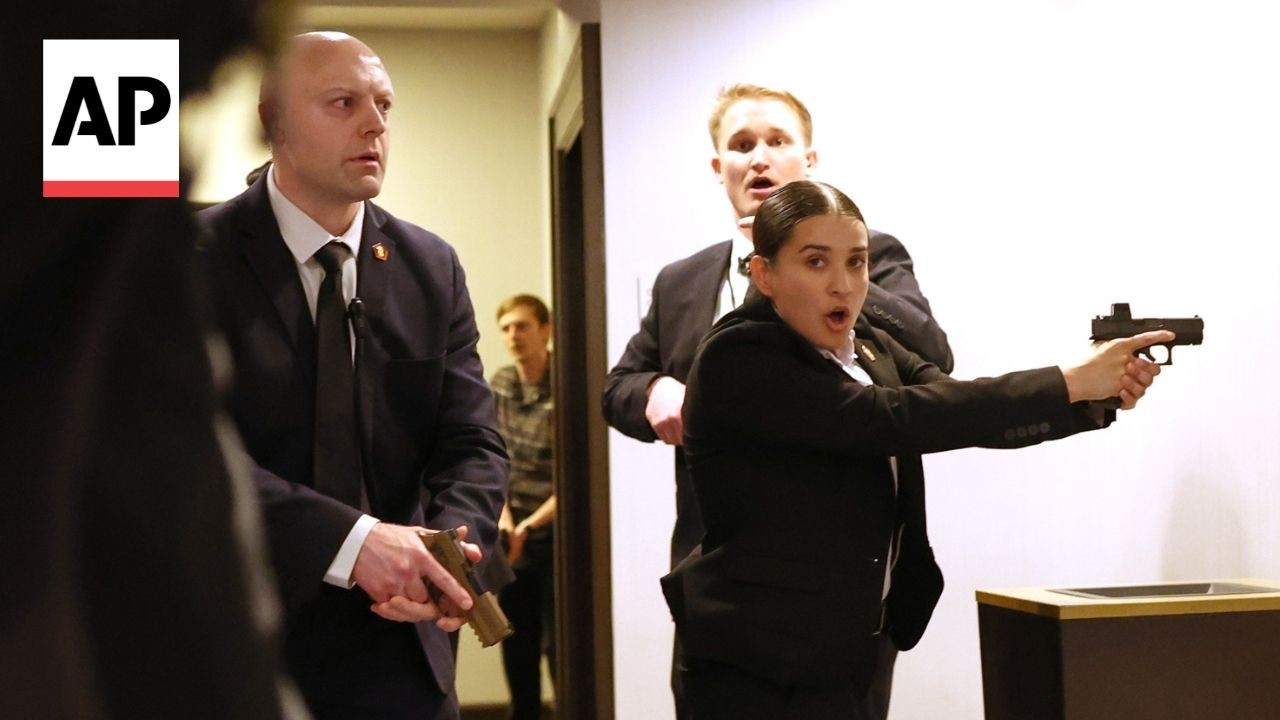
On April 26, 2026, a **gunman** carrying **multiple weapons** attempted to break into the **White House Correspondents’ Dinner** that **President Trump** was at
Summary
On April 26, 2026, a **gunman** carrying **multiple weapons** attempted to break into the **White House Correspondents’ Dinner** that **President Trump** was attending. According to **The New York Times**, **police** have taken a **suspect** into custody. The incident has raised concerns about **security** at high-profile events. The **White House** has not commented on the incident, but **Secret Service** officials have confirmed that the suspect was apprehended. This event is a stark reminder of the importance of **event security** and the need for **law enforcement** to be vigilant. For more information on the **White House Correspondents’ Dinner**, visit [[white-house-correspondents-dinner|White House Correspondents’ Dinner]]. The **Secret Service** has a long history of protecting **presidents** and **high-profile events**, as seen in the [[secret-service|Secret Service]] page.
Key Takeaways
- A gunman attempted to break into the White House Correspondents’ Dinner
- The suspect was taken into custody by police
- The incident has raised concerns about security and gun control
- The motivations behind the attack are unclear
- The incident is a reminder of the importance of security and gun control
Balanced Perspective
The incident at the **White House Correspondents’ Dinner** is a reminder that **security** is a complex issue. While the **suspect** was apprehended, it is unclear what **motivated** the attack. The **investigation** is ongoing, and it is too early to draw conclusions about the **causes** of the incident. The **FBI** and **Secret Service** are working together to determine the **motivations** behind the attack. For more information on the **FBI**, visit [[fbi|FBI]]. The **Department of Homeland Security** has also been involved in the investigation, as seen in the [[department-of-homeland-security|Department of Homeland Security]] page.
Optimistic View
The fact that the **suspect** was apprehended quickly is a testament to the **effectiveness** of **law enforcement** and **event security**. This incident could lead to a renewed focus on **mental health** and **gun control**, potentially leading to **meaningful reforms**. The **White House** and **Congress** may work together to pass **bipartisan legislation** to address these issues. For more information on **bipartisan legislation**, visit [[bipartisan-legislation|Bipartisan Legislation]]. The **National Alliance on Mental Illness** has also been a strong advocate for **mental health reform**, as seen in the [[national-alliance-on-mental-illness|National Alliance on Mental Illness]] page.
Critical View
The incident at the **White House Correspondents’ Dinner** is a stark reminder of the **vulnerability** of **high-profile events**. The fact that a **gunman** was able to get close to the **President** is a concern. The **incident** may have been **preventable**, and it is unclear what **measures** will be taken to prevent similar incidents in the future. The **Congress** and **White House** may need to re-examine their **security protocols** to prevent future incidents. For more information on **security protocols**, visit [[security-protocols|Security Protocols]]. The **Government Accountability Office** has also been critical of **security protocols** in the past, as seen in the [[government-accountability-office|Government Accountability Office]] page.
Source
Originally reported by The New York Times